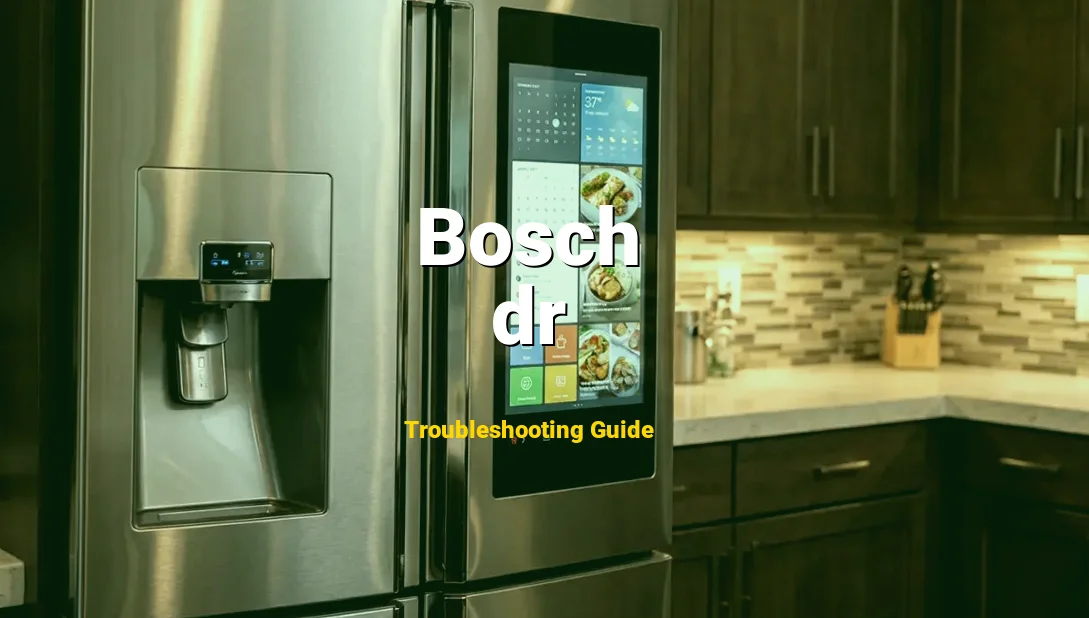
The Bosch Refrigerator Error “dr” indicates a detected issue with the door circuit. Specifically, the appliance’s control board believes the door is physically open or the door switch sensor has failed. This trigger halts specific functions like the ice dispenser and internal cooling to prevent energy waste and frost buildup.
📖 Warning: Check Manual First
Don’t guess the wiring. Get the official PDF to see the exact schematics.
Hey there, DIY friend! I know seeing a flashing code on your high-end Bosch fridge can be a bit nerve-wracking, especially if you’re hearing that persistent beeping or noticing your ice cubes are starting to sweat. You might even find that your internal lights are staying on, making the fridge interior feel warmer than usual. But take a deep breath—you’re in the right place! Most of the time, the “dr” code is just your fridge’s way of asking for a little bit of attention. We are going to walk through this together, step-by-step, and get your kitchen back to its quiet, chilly self without needing a high-priced service call.
Symptoms
When your Bosch unit is struggling with a “dr” error, it won’t just sit there quietly. You will likely notice a combination of these frustrating signs:
- The “dr” Flash: The digital display on the front door or the interior panel will alternate between the temperature set point and the letters “dr”.
- Audible Alarm: A repetitive beeping or “chiming” sound that persists even after you’ve made sure the doors are closed tight.
- Internal Light Malfunction: You might notice the LED lights staying on when the door is closed (if you can peek through the seal) or failing to turn on entirely.
- Dispenser Lockout: As a safety feature, your Bosch fridge will often disable the water and ice dispenser because it thinks the door is open, preventing a potential mess.
- Rise in Temperature: If the switch is stuck in the “open” position, the fridge may stop circulating cold air actively, leading to lukewarm milk and soft ice cream.
The Complete Solution
The Complete Solution
Don’t worry, we are going to tackle this systematically. Follow these steps in order, as we’ll start with the easiest fixes first!
Step 1: The Hard Reset and Alignment Check
Before we take anything apart, let’s try the “IT special.” Unplug your refrigerator from the wall outlet and leave it completely unpowered for at least 10 minutes. This allows the capacitors on the control board to discharge and clear any temporary logic errors. While you wait, check your door bins. Are they overloaded? Rearrange heavy milk jugs or condiments away from the door to ensure the hinges aren’t being pulled out of alignment. Plug it back in and see if the “dr” clears.
Step 2: Inspect and Clean the Magnetic Seal
Take a warm, damp cloth with a little bit of mild dish soap and wipe down the entire perimeter of the door gasket and the fridge frame where the seal meets the metal. If there is a sticky residue, it can prevent the door from closing that final millimeter required to trigger the sensor. Check for any tears or sections where the gasket is pulling away from the door. If it’s loose, you can often push it back into its channel using your fingers.
Step 3: Locating and Accessing the Door Switch
SAFETY WARNING: Ensure the refrigerator is unplugged before proceeding with any tool-based disassembly to avoid electric shock.
On most Bosch models, the door switch is located at the top of the cabinet frame or hidden behind a small plastic grill near the top hinge. Use a flat-head screwdriver or a plastic putty knife to gently pry the switch housing out of the frame. Be careful not to scratch the finish! Once it pops out, you’ll see a wire harness clipped to the back of the switch.
Step 4: Testing for Continuity
Set your digital multimeter to the “Continuity” setting (the one that beeps when you touch the probes together). Disconnect the wire harness from the switch. Place your probes on the metal terminals of the switch. If it’s a plunger-style switch, the meter should beep when the plunger is released and stop when it’s pressed (or vice versa). If you get no reading at all regardless of the button position, the switch is dead and needs to be replaced.
Step 5: Installing the New Switch
If your test failed, search for your specific Bosch model number (found on a sticker inside the fridge wall) to order the correct replacement switch. Once you have it, simply plug the wire harness into the new component and snap it back into the fridge frame. It should click firmly into place. Plug the fridge back in, and that pesky “dr” code should be a thing of the past!
| Category | Details |
|---|---|
| Difficulty | Easy to Moderate (No advanced electrical skills required) |
| Estimated Time | 20 to 45 Minutes |
| Tools Needed | Phillips-head screwdriver, Flat-head screwdriver (or putty knife), Digital Multimeter |
| Estimated Cost | $0 (Clean/Reset) to $45 (Replacement Switch) |
What Triggers this Code?
What Triggers this Code?
Understanding the “why” is the first step to a permanent fix. The “dr” code isn’t just a random glitch; it’s a response to a break in the communication loop between your door and the main control board.
1. Mechanical Obstruction or Gasket Sag: Over time, the magnetic gaskets (the rubber seals) can collect syrup, crumbs, or dust. This creates “micro-gaps.” If the door doesn’t sit perfectly flush, the sensor might not be triggered. Furthermore, heavy items in the door bins can cause the door to sag slightly, moving the magnet out of alignment with the sensor.
2. Door Switch Component Failure: Most modern Bosch refrigerators use a reed switch (a magnetic sensor) or a mechanical plunger. Like any electronic part, these have a finite lifespan. Frequent opening and closing, or even a sudden voltage spike in your home, can fry the delicate internal contacts of the switch, leaving it stuck in the “Open” state regardless of the door’s actual position.
3. Wiring Harness Fatigue: Think about how many times a day that door swings open. The wires connecting the door sensors to the main body of the fridge run through the top or bottom hinges. Constant bending can lead to “wire fatigue,” where the copper strands inside the insulation eventually snap or fray, interrupting the signal and throwing the “dr” error.
How to Prevent Error dr
Now that your fridge is healthy again, let’s keep it that way! Maintenance is the key to longevity.
- Condition the Gaskets: Once every six months, apply a very thin layer of food-grade silicone grease or even a tiny bit of Vaseline to the hinge side of the door gasket. This keeps the rubber supple and prevents it from “grabbing” and folding over, which often leads to alignment issues.
- Level the Unit: Use a spirit level to ensure your fridge is tilted slightly *backward*. Most Bosch units have adjustable feet at the front. If the fridge leans slightly back, gravity will help ensure the door closes with enough force to engage the sensors every single time.
- Don’t Slam the Door: It sounds simple, but the jarring impact of slamming can eventually shift the magnetic sensors or loosen the wire connectors inside the door panel. A gentle close is all it needs!
Frequently Asked Questions
Q: Can I just tape the door switch down to bypass the error?
A: While this might stop the beeping temporarily on plunger-style switches, it’s not a good long-term fix. The fridge needs to know when the door is open to manage defrost cycles and fan speeds. Bypassing it can lead to heavy frost buildup on the evaporator coils, eventually causing a total cooling failure.
Q: My lights work, but I still see the “dr” code. Why?
A: Some Bosch models use dual-zone sensors. One part of the switch might control the light, while another signal goes to the control board for the “Door Ajar” logic. If one side of the internal circuit fails, you can have working lights but a persistent error code.
Q: What if I replaced the switch and the code is still there?
A: If a new switch doesn’t fix it, the issue likely lies in the wiring harness at the hinge or the control board itself. Inspect the wires at the top hinge for any visible kinks or breaks. If the wiring looks perfect, you may need a technician to test the main control module.